

PersistentAI Intro
PersistentAI is a visual, flow-based framework for building AI agents with complex logic. You build workflows by connecting reusable nodes in a drag-and-drop interface.
Nodes cover the following:
- Triggers to catch an incoming event, e.g. a new chat message from a user
- Data transformations to filter, merge, and reshape data between nodes
- Templates to assemble a prompt out of several inputs
- AI model calls to send a prompt to an LLM and let it use tools
- MCP integration to connect to external services and tools
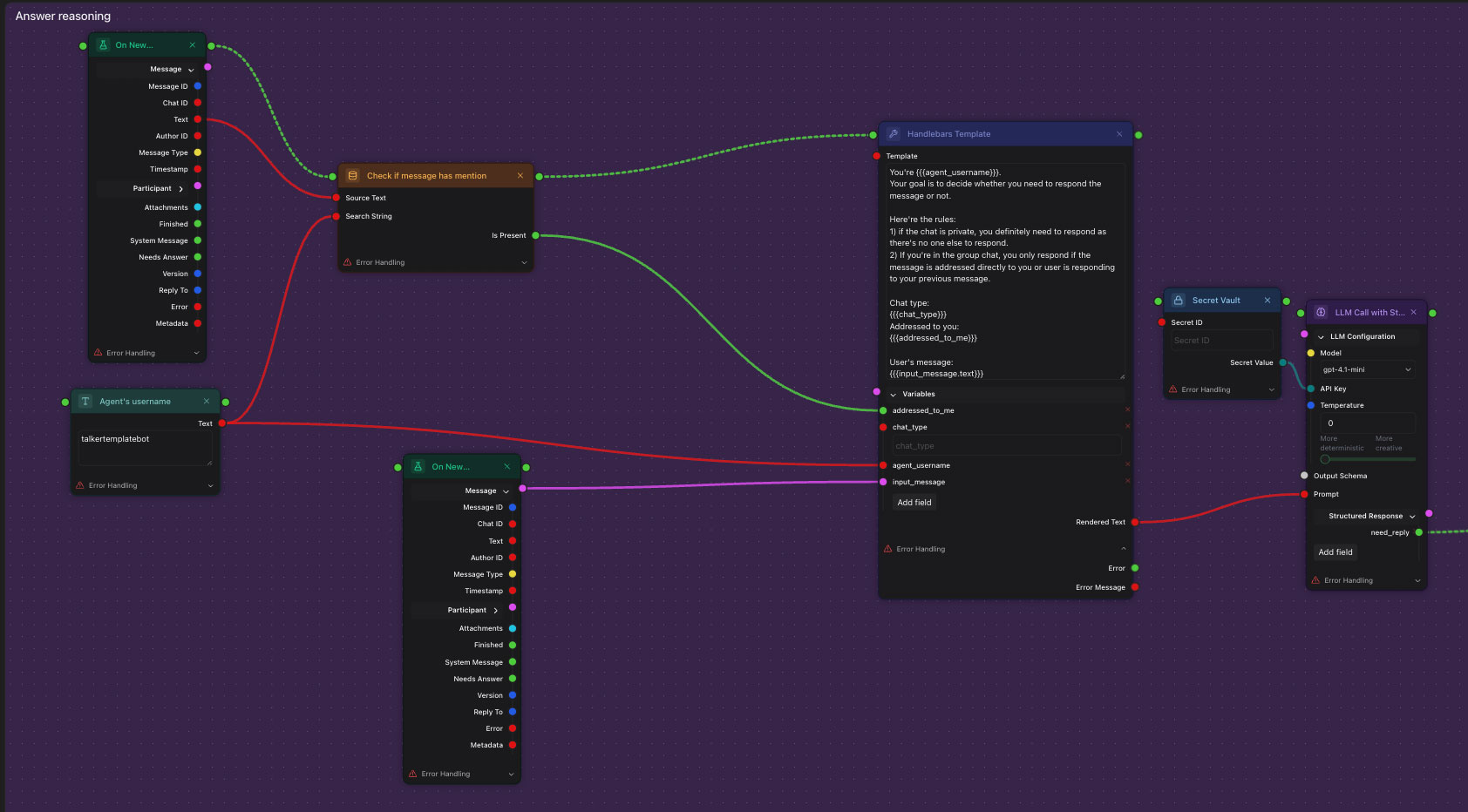
It works with any LLM provider (see Calling LLMs), so you're not locked into a single model or vendor. The DevOps infrastructure underneath (sandboxing, virtual machines, secret handling) is built in, so you don't have to wire it up yourself.
Type-safe data flow
Ports are typed, and PersistentAI validates data as it moves between nodes at runtime. This covers complex data types: objects, arrays, streams, encrypted secrets, and catches integration mistakes (wrong type on a port, missing required field) before they turn into a debugging session.
Real-time execution feedback
Nodes can run concurrently, and the platform streams events as the flow executes, so you can watch a run happen step by step rather than waiting for a final result. When something goes wrong, execution logs show you exactly which node failed and why.
Integrating external tools
Point PersistentAI at an MCP server address and it wraps it into a usable node automatically — no custom integration code required. See MCP for details.
If you're interested in what's under the hood (TypeScript, React, tRPC, the execution engine), that's covered in Architecture in the Developer docs.
Where to go next
Getting Started
Quickstart
Build your first agent in 5 minutes.
Data Types
Learn the core data types nodes pass between each other.